
Vat Savitri Vrat 2026: Date, Puja Vidhi, Story, and Everything You Need to Know वट सावित्री व्रत 2026: तिथि, पूजा विधि, कथा और जानने योग्य हर बात
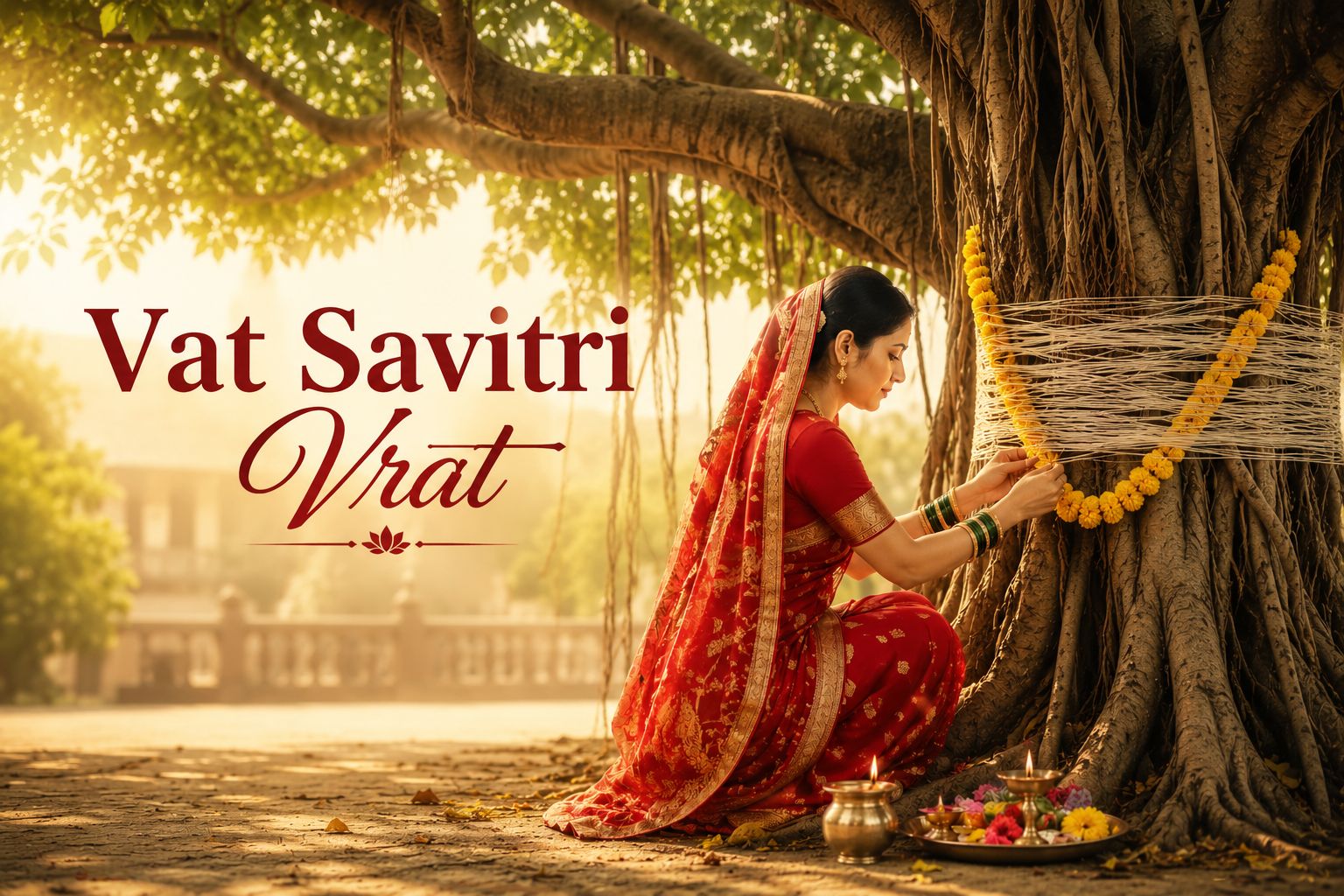
Few vrats in the Hindu calendar carry the kind of emotional weight that Vat Savitri Vrat does. For married women across North India, it is the day they sit under the spreading shade of a banyan tree, tie a thread around its trunk, and ask the heavens for one simple thing — that their husband live a long, healthy life. In 2026, this deeply personal observance falls on Saturday, 16 May, and what makes this year unusual is that the same day also marks Shani Jayanti, a rare coincidence that has astrologers and devotees talking. हिंदू पंचांग में जितने व्रत हैं, उनमें वट सावित्री व्रत की भावनात्मक गहराई कुछ अलग ही है। उत्तर भारत की सुहागिन महिलाओं के लिए यह वह दिन है जब वे बरगद की छाँव में बैठकर, उसके तने पर कच्चा सूत लपेटते हुए, ईश्वर से बस एक सरल-सी प्रार्थना करती हैं — कि उनके पति को लंबी और स्वस्थ आयु मिले। साल 2026 में यह व्रत शनिवार, 16 मई को पड़ रहा है, और इस बार खास बात यह है कि इसी दिन शनि जयंती भी है — एक दुर्लभ संयोग, जिसकी चर्चा ज्योतिषियों और भक्तों के बीच खूब हो रही है।
Few vrats in the Hindu calendar carry the kind of emotional weight that Vat Savitri Vrat does. For married women across North India, it is the day they sit under the spreading shade of a banyan tree, tie a thread around its trunk, and ask the heavens for one simple thing — that their husband live a long, healthy life. In 2026, this deeply personal observance falls on Saturday, 16 May, and what makes this year unusual is that the same day also marks Shani Jayanti, a rare coincidence that has astrologers and devotees talking.
When Is Vat Savitri Vrat in 2026?
The vrat is observed every year on Jyeshtha Amavasya — the new moon day of the Hindu month of Jyeshtha. According to the Panchang, the Amavasya tithi this year begins at 5:11 AM on 16 May 2026 and continues until 1:30 AM on 17 May 2026. Since the udaya tithi (sunrise tithi) falls on 16 May, the main puja will be performed on Saturday.
A note worth mentioning: 2026 has an adhik maas (intercalary month), which means Jyeshtha technically has two Amavasyas. But by tradition, the vrat is performed on the regular Jyeshtha Amavasya, and that is the date almost every Panchang has settled on.
Shubh Muhurat for the Puja
While the puja can be performed at any time during the day, certain windows are considered especially auspicious:
- Morning slot: 7:27 AM to 9:06 AM
- Abhijit Muhurat: 11:56 AM to 12:49 PM
- Afternoon slot: 12:23 PM to 2:01 PM
Most women prefer to finish the puja before noon, particularly during the Abhijit Muhurat, which is regarded as one of the most powerful periods of the day.
What Is Vat Savitri Vrat?
In simple terms, Vat Savitri Vrat is a fast kept by married women for the long life and good health of their husbands. "Vat" means banyan tree, and "Savitri" refers to the legendary woman who, according to the Skanda Purana, brought her husband back from the clutches of Yamraj himself.
In different regions, the same vrat goes by different names — Bargadahi, Badmavas, or Savitri Amavasya — but the heart of the observance stays the same. Women fast (often without water, known as nirjala), dress in traditional attire with full sixteen shringar, and gather either alone or in groups under a banyan tree to perform the puja.
Why the Banyan Tree?
The banyan tree is not chosen at random. In Hindu belief, the vat vriksha is said to house all three principal deities — Brahma in its roots, Vishnu in its trunk, and Mahadev (Shiva) in its branches. The long aerial roots that hang from its branches are considered to be a form of Goddess Savitri herself.
Beyond mythology, there is a beautiful logic to it. The banyan is one of the longest-living trees in nature, sometimes surviving for centuries. By praying to it, women are essentially asking that their marriage and their husband's life take on the same quality of permanence.
The Story Behind the Vrat: Savitri and Satyavan
The legend, narrated by Lord Shiva to Sanatkumar in the Skanda Purana, is one of the most moving in Hindu literature.
Long ago, in the kingdom of Madra, there ruled a noble king named Ashwapati. Despite all his wealth and learning, he had no children. He and his queen performed years of penance to please Goddess Savitri, who finally appeared and granted him a daughter — a girl so radiant she was named after the goddess herself.
When Savitri came of age, no prince dared seek her hand because of her divine aura. So her father sent her out to find her own husband. She chose Satyavan, the son of the exiled, blind king Dyumatsena, who lived as an ascetic in the forest. Satyavan was virtuous, handsome, and skilled — but the sage Narada delivered a chilling warning to her father: Satyavan would die exactly one year from that day.
Savitri refused to change her choice. "A king's word, a scholar's verdict, and a girl's hand in marriage — these three are given only once," she told her father. The marriage took place, and Savitri quietly began counting down the days.
On the morning that Narada had foretold, Satyavan went into the forest to gather wood. Savitri insisted on going with him. As he chopped at a tree, he suddenly felt a sharp pain in his head and laid down with his head in her lap. Moments later, Yamraj himself appeared, ready to take Satyavan's soul.
What followed is one of the great philosophical exchanges in Indian mythology. Savitri followed Yamraj into the forest, refusing to turn back. Impressed by her devotion and wisdom, the lord of death offered her boon after boon — anything except her husband's life. She asked first for her blind father-in-law's sight to be restored, then for his lost kingdom to be returned, then for a hundred sons for her own sonless father.
When Yamraj, charmed by her every word, offered her one more boon — anything but Satyavan's life — Savitri asked for a hundred sons of her own, born to her and Satyavan. Yamraj said "Tathastu" without thinking. And only then did Savitri smile: how could she bear children if her husband was dead? Cornered by his own boon, Yamraj had no choice but to release Satyavan's soul.
Savitri returned to the banyan tree where Satyavan's body lay, and he awoke as if from a deep dream. By the time they walked back, her father-in-law had regained both his eyesight and his throne. This is the story that women remember each year, sitting under the vat vriksha.
Puja Samagri: What You Will Need
Before the puja day, women usually keep aside a basket containing:
- A bamboo hand fan (essential — used to fan the deity, symbolizing the breath of life Savitri returned to Satyavan)
- Raw cotton thread (kachcha sutra) for tying around the banyan tree
- Sindoor, bindi, bangles, and other items of sixteen shringar
- Roli, akshat (rice), moli, supari
- Coconut, paan, dhoob grass (durva)
- Seasonal fruits — usually mango, lychee, and bananas
- Sweets such as batashe or homemade mithai
- Soaked black gram (bhige chane)
- A small red cloth
- Water in a kalash, agarbatti, and a lamp
How to Perform the Puja
The puja itself is straightforward, though it carries the weight of generations of tradition. After bathing in the morning, women dress in red, yellow, or other bright traditional colours and apply full sixteen shringar. They take a sankalp — a personal vow — with water, rice and flowers in their hand.
At the banyan tree, the steps usually unfold in this order. First, water mixed with raw milk is offered at the roots while reciting:
Vat sinchami te moolam salilair amritopamai, Yatha shakhaprashakhabhir vridhosi tvam mahitale, Tatha putraishcha pautraishcha sampannam kuru mam sada.
Then sindoor, roli, and akshat are applied to the trunk. Flowers, fruits and sweets are offered. The most distinctive part comes next: the raw thread is wound around the tree's trunk, and the woman walks around it in parikrama — seven, eleven, or sometimes 108 times — silently repeating her prayer with each round. This thread symbolises the bond between husband and wife.
Finally, the bamboo fan is gently waved towards the tree and a picture or idol of Savitri-Satyavan, mimicking the moment Savitri fanned her revived husband. The vrat katha is then read or listened to in a group, with twelve soaked black grams held in the hand. After the katha, women touch the feet of elders in the family to seek their blessings, and break their fast by eating the soaked chane and a tender shoot of the banyan tree.
If You Don't Have a Banyan Tree Nearby
In cities, locating a banyan tree is not always easy. Religious authorities are clear that this should not be an obstacle. You can plant a banyan twig in a pot at home, or place a picture or a small clay image of the tree at your puja altar and perform the rituals in front of it. As one Hindi religious daily puts it, in this vrat, shraddha (devotion) sits above vidhi (procedure). A puja done with a full heart in front of a symbolic representation is considered as fruitful as one done under the actual tree.
Ten Things Every Woman Observing the Vrat Should Know
- The vrat's main purpose is the long life and good health of the husband, not a transactional bargain.
- All three Trimurti reside in the banyan tree — Brahma in the roots, Vishnu in the trunk, Shiva in the branches.
- The bamboo fan is non-negotiable. It symbolizes Savitri reviving Satyavan's breath. Many women donate it after the puja.
- The thread around the tree should be wound while silently repeating your prayer; seven, twelve, or 108 rounds are all considered valid.
- Soaked black gram (chana) is the prasad. Twelve grams are held in the hand during the katha, and the vrat is traditionally broken by eating them along with a tender banyan shoot.
- Sixteen shringar is shubh. Sindoor, bindi and mehndi are particularly important; red or yellow new clothes are preferred.
- The katha is not optional. A vrat performed without listening to or reading the Savitri-Satyavan story is considered incomplete.
- Charity matters. After the puja, donating fruits, grains, clothes — and especially the bamboo fan — to a Brahmin or someone in need is considered highly auspicious. Setting up a water-station (pyaau) in the Jyeshtha heat earns equal punya.
- Take blessings from elders. Touching the feet of in-laws or older women in the family after the puja is part of the tradition.
- Group puja is more rewarding. Women often gather together, which reinforces the social and emotional fabric of the observance.
A Word for First-Time Women Keeping This Vrat
If this is the first year of your married life and you are keeping the vrat for the first time, the most common piece of advice from older women in the family is simple — keep the intention clean and the heart open. The puja vidhi can be learnt from any elder, but the spirit of the vrat is yours alone. Many newly married women begin with the nirjala fast; others, especially those with health concerns, take fruit and water. There is no penalty for choosing what your body can sustain.
Vat Savitri and Shani Jayanti Together in 2026
This year, Vat Savitri Vrat coincides with Shani Jayanti, the birth anniversary of Shani Dev — an unusual conjunction. Astrologers consider this a rare yog where worshipping the banyan tree in the morning and offering black sesame, mustard oil, or black cloth to Shani Dev in the evening can bring double the spiritual benefit. For women whose families are dealing with Shani's transit (sade-sati or dhaiya), this is being seen as a particularly meaningful day.
हिंदू पंचांग में जितने व्रत हैं, उनमें वट सावित्री व्रत की भावनात्मक गहराई कुछ अलग ही है। उत्तर भारत की सुहागिन महिलाओं के लिए यह वह दिन है जब वे बरगद की छाँव में बैठकर, उसके तने पर कच्चा सूत लपेटते हुए, ईश्वर से बस एक सरल-सी प्रार्थना करती हैं — कि उनके पति को लंबी और स्वस्थ आयु मिले। साल 2026 में यह व्रत शनिवार, 16 मई को पड़ रहा है, और इस बार खास बात यह है कि इसी दिन शनि जयंती भी है — एक दुर्लभ संयोग, जिसकी चर्चा ज्योतिषियों और भक्तों के बीच खूब हो रही है।
वट सावित्री व्रत 2026 की तिथि
यह व्रत हर साल ज्येष्ठ अमावस्या को रखा जाता है। पंचांग के अनुसार, इस वर्ष अमावस्या तिथि 16 मई 2026 को सुबह 5:11 बजे से शुरू होकर 17 मई 2026 को रात 1:30 बजे तक रहेगी। उदया तिथि 16 मई को है, इसलिए मुख्य व्रत और पूजा शनिवार को ही की जाएगी।
एक बात ध्यान रखने योग्य है: इस साल अधिक मास होने के कारण ज्येष्ठ माह में दो अमावस्या तिथियाँ पड़ रही हैं, परंतु परंपरा के अनुसार मुख्य व्रत हमेशा नियमित ज्येष्ठ अमावस्या को ही किया जाता है। लगभग सभी पंचांगों में 16 मई की तिथि पर सहमति है।
पूजा का शुभ मुहूर्त
वैसे तो दिन भर में किसी भी समय पूजा की जा सकती है, लेकिन कुछ मुहूर्त विशेष फलदायी माने गए हैं:
- सुबह का मुहूर्त: 7:27 से 9:06 बजे तक
- अभिजीत मुहूर्त: दोपहर 11:56 से 12:49 बजे तक
- दोपहर का मुहूर्त: 12:23 से 2:01 बजे तक
अधिकांश महिलाएँ दोपहर से पहले, विशेषकर अभिजीत मुहूर्त में पूजा संपन्न करना श्रेष्ठ मानती हैं।
वट सावित्री व्रत है क्या?
सीधे शब्दों में कहें तो यह व्रत सुहागिन महिलाओं द्वारा पति की दीर्घायु और सुख-समृद्धि के लिए रखा जाता है। "वट" का अर्थ है बरगद का वृक्ष, और "सावित्री" — वही पतिव्रता नारी जिसने स्कंद पुराण की कथा के अनुसार अपने तप और बुद्धि से यमराज से अपने पति सत्यवान के प्राण वापस ले लिए थे।
अलग-अलग क्षेत्रों में यह व्रत अलग नामों से जाना जाता है — कहीं बरगदाही, कहीं बड़मावस, कहीं सावित्री अमावस्या। लेकिन व्रत का मूल भाव हर जगह एक ही रहता है। महिलाएँ निर्जला उपवास रखती हैं, सोलह श्रृंगार करती हैं, और अकेले या समूह में बरगद के पेड़ के नीचे जाकर पूजा करती हैं।
बरगद के पेड़ का ही महत्व क्यों?
बरगद का चयन यूँ ही नहीं हुआ है। हिंदू मान्यता के अनुसार, वट वृक्ष की जड़ों में ब्रह्मा, तने में विष्णु और शाखाओं में महादेव शिव का वास होता है। इसकी जो लटकती हुई जड़ें होती हैं, उन्हें स्वयं देवी सावित्री का स्वरूप माना गया है।
पौराणिक मान्यता से परे, इसमें एक सुंदर तर्क भी छिपा है। बरगद प्रकृति के सबसे दीर्घजीवी वृक्षों में से एक है — कई बार सैकड़ों वर्षों तक जीवित रहता है। इस पेड़ की पूजा करके महिलाएँ मानो अपने वैवाहिक जीवन और पति की आयु में भी वही स्थायित्व माँगती हैं।
व्रत की कथा: सावित्री और सत्यवान
स्कंद पुराण में भगवान शिव ने सनतकुमार को यह कथा सुनाई थी, और यह भारतीय साहित्य की सबसे मार्मिक कहानियों में से एक है।
बहुत समय पहले मद्र देश में अश्वपति नाम के एक धर्मात्मा राजा राज्य करते थे। समस्त वैभव होते हुए भी उनके कोई संतान नहीं थी। राजा और रानी ने वर्षों तक देवी सावित्री की कठोर तपस्या की। प्रसन्न होकर देवी प्रकट हुईं और उन्हें एक तेजस्वी कन्या का वरदान दिया। उस कन्या का नाम देवी के नाम पर ही सावित्री रखा गया।
सावित्री विवाह योग्य हुई तो उसके दिव्य तेज से डरकर कोई राजकुमार उसका हाथ माँगने नहीं आया। राजा ने उसे स्वयं अपना वर चुनने के लिए भेजा। सावित्री ने वन में निर्वासित, अंधे राजा द्युमत्सेन के पुत्र सत्यवान को चुना। सत्यवान गुणवान और सुंदर थे, परंतु देवर्षि नारद ने राजा अश्वपति को एक भयानक भविष्यवाणी सुनाई — सत्यवान की आयु ठीक एक वर्ष शेष है।
सावित्री ने अपना निर्णय नहीं बदला। उसने कहा — "राजा का वचन, पंडितों की बात, और कन्यादान — ये तीनों कार्य एक बार ही होते हैं।" विवाह संपन्न हुआ, और सावित्री चुपचाप दिन गिनने लगी।
जिस सुबह नारद ने भविष्यवाणी की थी, सत्यवान लकड़ियाँ काटने वन गए। सावित्री ने भी साथ चलने की हठ की। पेड़ काटते-काटते अचानक सत्यवान के सिर में तेज पीड़ा हुई और वे सावित्री की गोद में सिर रखकर लेट गए। उसी क्षण यमराज स्वयं प्रकट हुए और सत्यवान के प्राण लेकर दक्षिण दिशा की ओर चल पड़े।
इसके बाद जो हुआ वह भारतीय पुराणों के सबसे महान संवादों में से एक है। सावित्री यमराज के पीछे-पीछे चल पड़ी, लौटने से इनकार कर दिया। उसकी निष्ठा और बुद्धिमत्ता से प्रसन्न होकर यमराज ने उसे एक-एक करके वरदान देने शुरू किए — सत्यवान के प्राण को छोड़कर जो माँगो। उसने पहले अपने अंधे ससुर की आँखों की रोशनी माँगी, फिर उनका खोया हुआ राज्य, फिर अपने सौ भाइयों के लिए वरदान।
जब यमराज ने प्रसन्न होकर एक और वर माँगने को कहा — सत्यवान के प्राण को छोड़कर — तो सावित्री ने अपने और सत्यवान से उत्पन्न सौ पुत्रों का वरदान माँग लिया। यमराज ने बिना सोचे "तथास्तु" कह दिया। तब सावित्री ने हल्की मुस्कान के साथ पूछा — पति के बिना मैं पुत्र कैसे प्राप्त करूँगी? अपने ही वचन में बँधे यमराज को सत्यवान के प्राण मुक्त करने पड़े।
सावित्री बरगद के पेड़ के पास लौटी, जहाँ सत्यवान का शरीर रखा था। वह ऐसे जागे मानो किसी गहरी नींद से उठे हों। लौटते-लौटते उनके ससुर की आँखें भी ठीक हो चुकी थीं और राज्य भी वापस मिल चुका था। यही वह कथा है जिसे महिलाएँ हर वर्ष वट वृक्ष के नीचे बैठकर याद करती हैं।
पूजा सामग्री की सूची
पूजा से एक दिन पहले महिलाएँ आमतौर पर ये चीज़ें एकत्रित कर लेती हैं:
- बाँस का हाथ का पंखा (अत्यंत आवश्यक — सावित्री द्वारा सत्यवान को हवा करने का प्रतीक)
- कच्चा सूत (बरगद पर लपेटने के लिए)
- सिंदूर, बिंदी, चूड़ी और सोलह श्रृंगार की सभी वस्तुएँ
- रोली, अक्षत (चावल), मौली, सुपारी
- नारियल, पान, दूर्वा घास
- मौसमी फल — आम, लीची, केला
- मिठाई या बताशे
- भीगे हुए काले चने
- एक छोटा लाल कपड़ा
- कलश में जल, अगरबत्ती और दीपक
पूजा कैसे करें
पूजा विधि वैसे तो सरल है, परंतु इसमें पीढ़ियों की परंपरा की गहराई है। प्रातः स्नान के बाद महिलाएँ लाल, पीले या अन्य पारंपरिक रंगों के नए वस्त्र पहनती हैं और सोलह श्रृंगार करती हैं। हाथ में जल, चावल और फूल लेकर व्रत का संकल्प लिया जाता है।
बरगद के पेड़ के पास पहुँचकर पहले पेड़ की जड़ में कच्चे दूध मिश्रित जल अर्पित किया जाता है, इस मंत्र के साथ:
वट सिंचामि ते मूलं सलिलैरमृतोपमै:। यथा शाखाप्रशाखाभिर्वृद्धोऽसि त्वं महीतले।। तथा पुत्रैश्च पौत्रैश्च सम्पन्नं कुरु मां सदा।।
फिर तने पर सिंदूर, रोली और अक्षत लगाए जाते हैं। फूल, फल और मिठाई चढ़ाई जाती है। इसके बाद सबसे विशिष्ट हिस्सा आता है — कच्चे सूत को पेड़ के तने पर लपेटते हुए परिक्रमा की जाती है — सात, ग्यारह, बारह या 108 बार। हर परिक्रमा के साथ मन ही मन प्रार्थना दोहराई जाती है। यह सूत पति-पत्नी के अटूट बंधन का प्रतीक है।
अंत में, बाँस के पंखे से वट वृक्ष और सावित्री-सत्यवान की तस्वीर/मूर्ति को हवा की जाती है — ठीक वैसे ही जैसे सावित्री ने पुनर्जीवित सत्यवान को हवा की थी। फिर हाथ में बारह भीगे चने रखकर वट सावित्री की कथा सुनी या पढ़ी जाती है। कथा के बाद घर के बुजुर्गों के चरण स्पर्श कर आशीर्वाद लिया जाता है, और भीगे चने तथा बरगद की कोंपल खाकर व्रत का पारण किया जाता है।
अगर पास में बरगद का पेड़ न हो तो?
शहरों में बरगद का पेड़ ढूँढना हमेशा आसान नहीं होता। शास्त्र इस बारे में स्पष्ट हैं कि यह कोई बाधा नहीं है। आप घर के गमले में बरगद की एक टहनी लगा सकती हैं, या पूजा स्थल पर बरगद की तस्वीर या मिट्टी की प्रतिमा रखकर भी पूजा कर सकती हैं। इस व्रत में श्रद्धा सर्वोपरि है, विधि उसके बाद आती है। सच्चे मन से प्रतीकात्मक रूप से की गई पूजा का फल वास्तविक पेड़ के नीचे की गई पूजा के समान ही माना जाता है।
व्रत रखने वाली हर महिला के लिए 10 ज़रूरी बातें
- व्रत का मुख्य उद्देश्य पति की लंबी आयु और स्वस्थ जीवन की कामना है — कोई सौदा नहीं।
- बरगद के पेड़ में तीनों देवों का वास होता है — जड़ में ब्रह्मा, तने में विष्णु, शाखाओं में शिव।
- बाँस का पंखा अनिवार्य है। यह सावित्री द्वारा सत्यवान को पुनर्जीवित करते समय हवा देने का प्रतीक है। पूजा के बाद कई महिलाएँ इसे दान भी कर देती हैं।
- कच्चे सूत की परिक्रमा मन में प्रार्थना दोहराते हुए करें; सात, बारह या 108 — कोई भी संख्या स्वीकार्य है।
- भीगे चने का प्रसाद लिया जाता है। कथा के समय बारह चने हाथ में रखे जाते हैं, और बरगद की कोंपल के साथ चने खाकर व्रत खोला जाता है।
- सोलह श्रृंगार शुभ है। सिंदूर, बिंदी और मेहंदी विशेष रूप से महत्वपूर्ण हैं; लाल या पीले रंग के नए वस्त्र श्रेष्ठ माने जाते हैं।
- कथा सुनना अनिवार्य है। बिना सावित्री-सत्यवान की कथा सुने व्रत अधूरा माना जाता है।
- दान का महत्व बहुत है। पूजा के बाद ब्राह्मणों या ज़रूरतमंदों को फल, अनाज, वस्त्र — विशेषकर बाँस का पंखा — दान करना अत्यंत पुण्य का कार्य है। ज्येष्ठ की गर्मी में प्याऊ लगवाना भी श्रेष्ठ पुण्य है।
- बुजुर्गों का आशीर्वाद लें। पूजा के बाद सास-ससुर और घर की बड़ी महिलाओं के पैर छूना परंपरा का हिस्सा है।
- सामूहिक पूजा अधिक फलदायी होती है। महिलाएँ अक्सर एक साथ इकट्ठा होकर पूजा करती हैं, जिससे आपसी प्रेम और सामाजिक एकता बढ़ती है।
पहली बार व्रत रखने वाली महिलाओं के लिए सुझाव
यदि यह आपके वैवाहिक जीवन का पहला वर्ष है और आप पहली बार यह व्रत रख रही हैं, तो परिवार की बुजुर्ग महिलाओं की सबसे आम सलाह यही होती है — मन शुद्ध रखें और हृदय खुला रखें। पूजा विधि किसी भी अनुभवी से सीखी जा सकती है, परंतु व्रत की भावना केवल आपकी अपनी होती है। बहुत-सी नव-विवाहिताएँ निर्जला व्रत से शुरुआत करती हैं; जिनकी स्वास्थ्य संबंधी समस्याएँ हैं, वे फल और जल ले सकती हैं। शरीर की क्षमता के अनुसार चयन करने में कोई दोष नहीं है।
2026 में वट सावित्री और शनि जयंती का दुर्लभ संयोग
इस वर्ष वट सावित्री व्रत शनि जयंती के साथ पड़ रहा है — एक असामान्य संयोग। ज्योतिषाचार्य इसे एक दुर्लभ योग मानते हैं जिसमें सुबह बरगद की पूजा और शाम को शनि देव को काले तिल, सरसों का तेल या काला कपड़ा अर्पित करने से दोहरा आध्यात्मिक लाभ प्राप्त हो सकता है। जिन परिवारों पर शनि की साढ़े-साती या ढैय्या चल रही है, उनके लिए यह दिन विशेष महत्व रखता है।